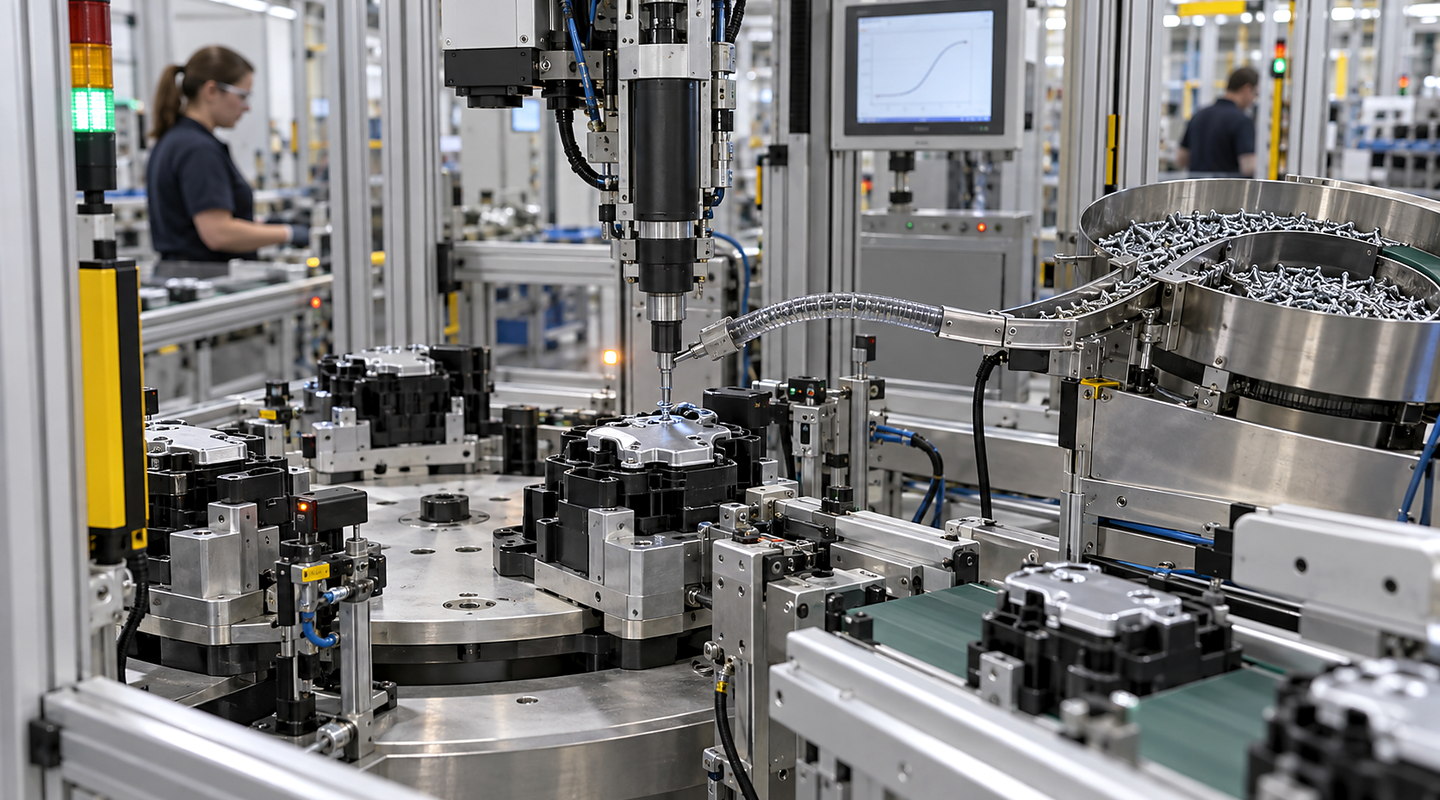
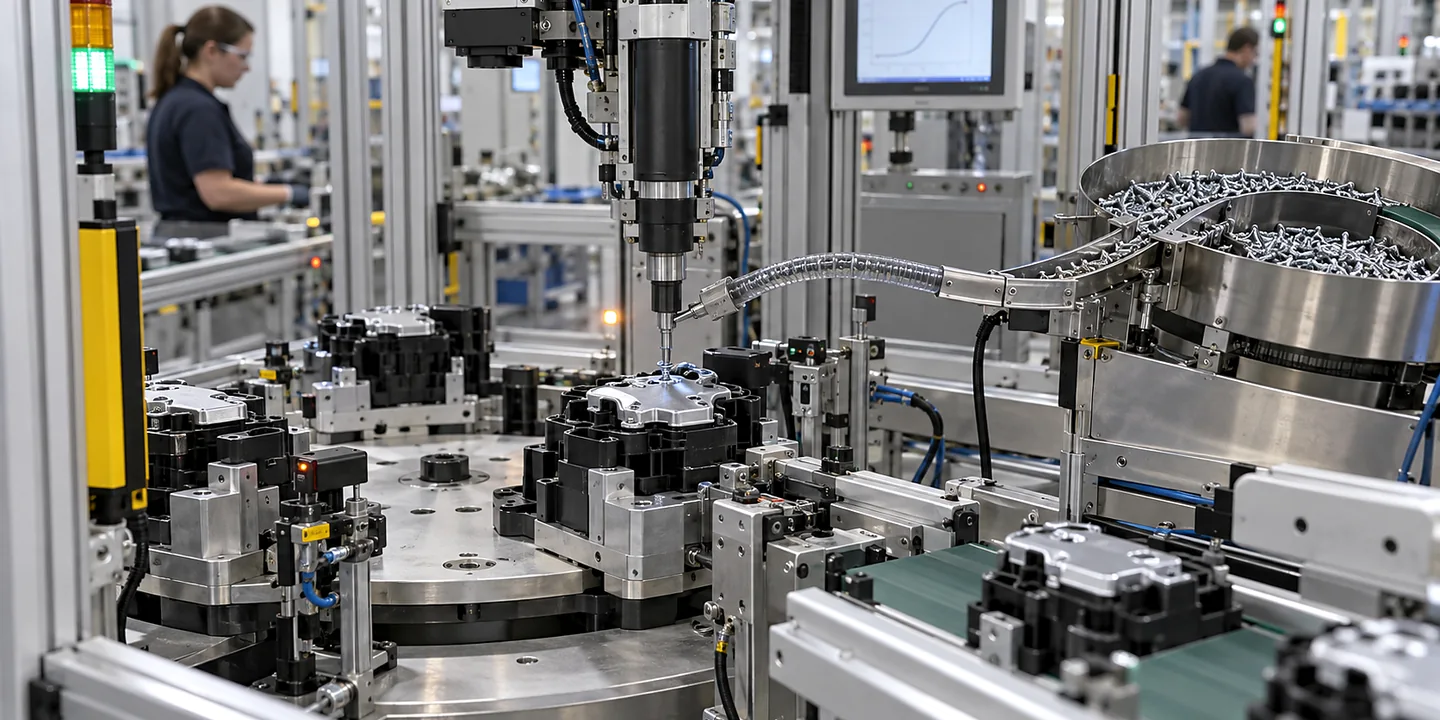
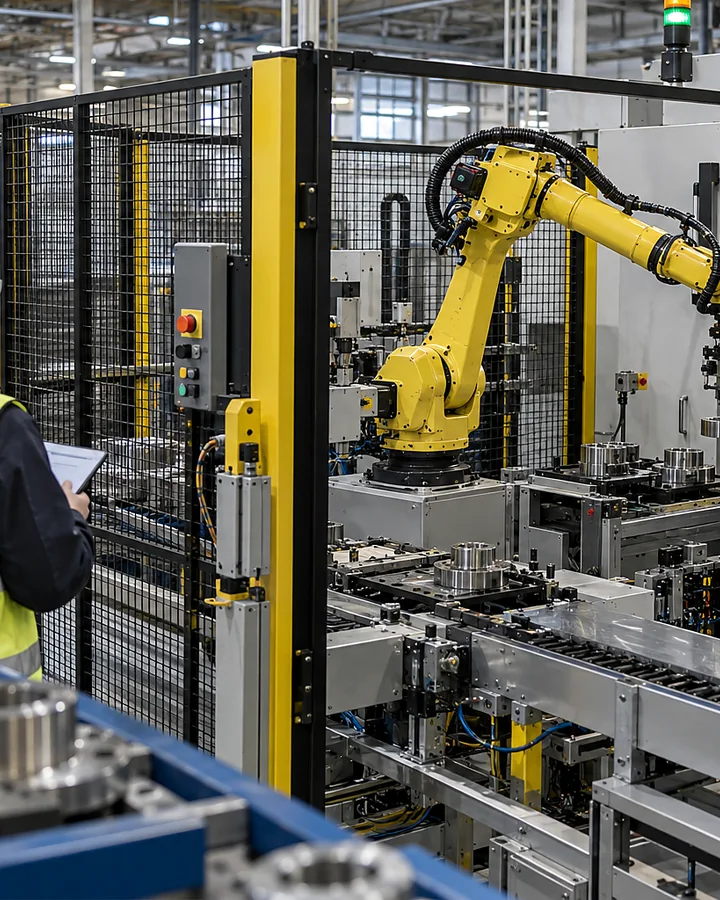
Robotic battery assembly should be broken into defined component-handling and process tasks before a complete cell is proposed. Establish the component state, approved handling constraints and required evidence with the responsible battery engineering team, then trial the least proven operation.
Speak directly with Oxford Industrial Automation about robotic battery-component assembly.
Quick answer
Which battery-component assembly steps are suitable for a feasibility trial?
Break the task into component presentation, handling, joining and inspection, identifying the least proven step. Provide the component specifications and process constraints, including the controls required by the responsible battery engineering team. Agree a bounded trial and acceptance record before extending its findings to the complete assembly cell.
Selection criteria
Bound the assembly task before automating it
Use these decisions to define the proposed equipment and the checks needed for your application.
Decision 1
Identify the component and its state
Distinguish the exact cells, modules, housings or other components involved and their condition at the proposed station. Obtain handling constraints and hazard information from the responsible engineering team. Do not transfer conclusions from one component or process state to another.
Decision 2
Define incoming presentation
Show trays, fixtures, tolerances, orientation and how parts arrive. Include incomplete trays, absent parts and incorrect variants in the assessment. Reliable presentation may be the main feasibility issue even when the robot movement appears straightforward.
Decision 3
Set handling constraints
Mark permitted contact surfaces, support points and excluded areas on drawings. Define the approved gripping and placement criteria with the component owner. A successful pickup alone does not show that handling has preserved the required component condition.
Decision 4
Separate assembly from process approval
List placement, fastening, joining, inspection and identification as distinct tasks. Record the responsible process specification and acceptance method for each. Robot repeatability cannot substitute for approval of a joining process or a functional product test.
Decision 5
Maintain identity through rework
Define how component and assembly identifiers are associated with operations and results. Include rejected parts, replacement components and a partially completed assembly. The record should reflect what actually remains in the assembly after an exception.
Decision 6
Plan recovery and access
Describe tool faults, incomplete operations and interrupted cycles. Agree how work in progress is identified and assessed before restarting. Safeguarding and battery-specific hazards require the relevant assessment for the complete cell and intended tasks.
Applications
Two useful starting points for robotic battery assembly
The right choice changes with part, product and process variation for robotic battery-component assembly, arrival pattern and presentation, your line layout and required results.
Follow the sequence below to resolve the main specification questions before committing to equipment or installation.
01
Choose a bounded trial
Select the handling or process interface carrying the most uncertainty and document what the trial will and will not establish.
02
Use approved samples and constraints
Work from component drawings, process requirements and the battery engineering team’s authorised handling conditions.
03
Prove normal and interrupted sequences
Assess placement and result association alongside missing parts, wrong variants and incomplete operations.
04
Define the complete-cell evidence
Carry validated assumptions, remaining risks, inspection requirements and recovery decisions into the cell specification.
Practical decision guide
Define the record for an interrupted battery-component assembly
An assembly record should describe what physically remains in the fixture after an interruption. Work with the responsible battery engineering and quality teams to define the component state, approved operations and recovery boundary; these planning steps do not authorise work on a particular cell or battery condition.
Distinguish requested, started and completed operations
For each placement, fastening, joining or inspection step, identify the evidence that establishes completion. A robot command being sent or a motion ending may not establish that the process succeeded. Keep an uncertain operation visibly unresolved until the approved review or test determines its status.
Keep component identity through replacement
If an approved recovery removes a component and substitutes another, retain which identifier now belongs to the assembly and which was removed. Do not leave the original association in place simply because the production order is unchanged. Define the required records before developing the automatic sequence.
Test incomplete information as well as missing parts
Challenge an unreadable identifier, an unexpected variant, a result that does not arrive and a restart with work left in the fixture. Use the agreed safe test method and authorised representative parts. The objective is to show that the control sequence recognises an incomplete state rather than inventing a completed history.
Agree who can release the next action
Allocate process approval, quality disposition and equipment recovery to the appropriate roles. Record the conditions under which the sequence may continue and those requiring a separate review. Use the battery-assembly selection guide to compare the proposed handling and data scope without assuming that a generic robot cell resolves battery-specific hazards.
Important limits
Know what needs a separate check
Cycle time depends on the complete process rather than robot speed alone.
Part presentation, tolerances and recovery cases must be included in feasibility work.
Collaborative operation or automatic handling cannot be assumed safe without an application assessment.
Your final solution for robotic battery-component assembly must reflect the law, current standards and site-specific risks that apply to your installation.